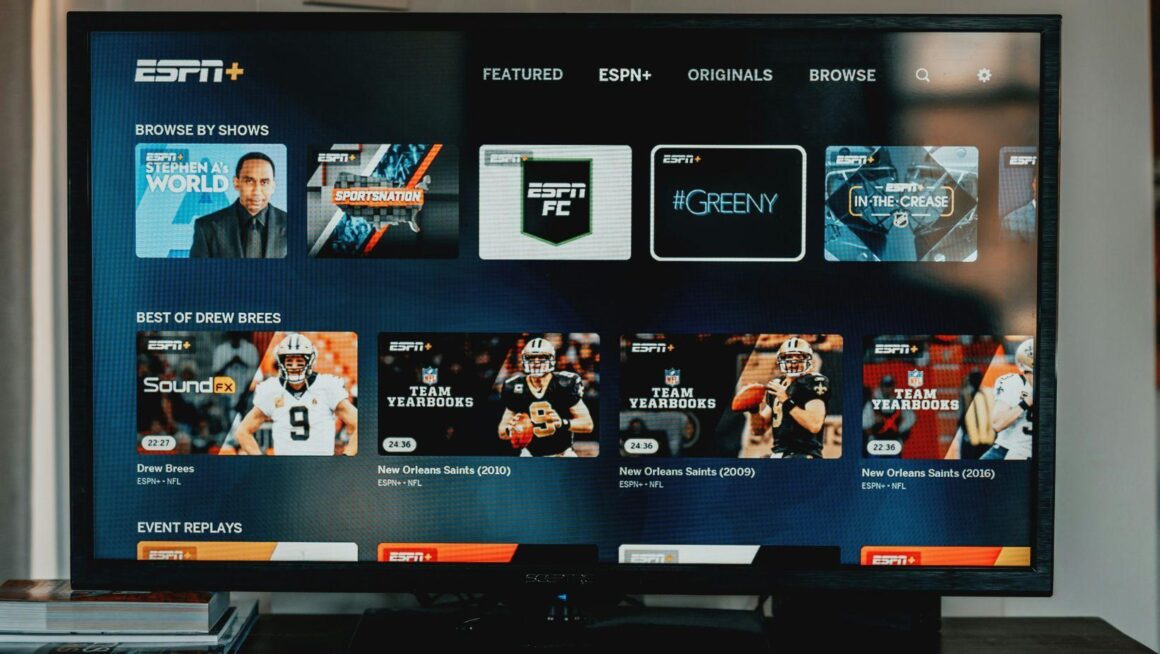
The return of the WSOP Main Event to ESPN caused excitement among poker fans when it was announced earlier this year. Not everyone could have predicted such low TV ratings, though.
ESPN’s Lance Bradley revealed the TV figures in his Substack column. Well, not the figures for the first day, because that didn’t make the top 100 cable shows and viewership data wasn’t available.
But on the second day, 451,000 people tuned in, before 593,000 watched Lucas Jumalon winning $10 million and the bracelet.
Those figures pale in comparison to the more than 2 million fans who watched Joe Cada’s win in 2009.
However, viewing habits have changed: cable has changed, and the internet has changed.
Streaming
During the poker boom, many more people were watching cable shows – whether that be the WSOP Main Event, a drama, or a comedy. Pew Research Center reports that cable TV subscriptions have dropped by 40%. Now, only 32-26% of US households maintain a cable or satellite subscription.
These services have been replaced by YouTube, Netflix, Hulu, and other competitors. That’s before you consider that there’s a greater range of other entertainment options than there was in 2009. There’s still cable, and there’s still whatever Joe Cada or an amateur player might consider the best online casino, but there’s also thousands of podcasts, audiobooks, TikTok, Twitch, and a dozen gaming and esports streams vying for attention.
Looking back on Cada’s 2009 win
Cada was only 21 years old when he defeated Darvin Moon, 46. Tears filled Cada’s eyes after the final river card had fallen. Moments after the famous win, Cada said he didn’t know what to think, but that poker had been his “life for some time now”. He acknowledged the luck involved.
The player had started that day with a better than 2:1 chip lead, having battled for over 14 hours on the first day. For a while, it seemed that Moon might turn the tide, clawing back 45 million chips as his queens cracked nines. Moon won most of the larger pots and eventually took over, getting to a near-3:1 chip lead.
Cada said he knew that Moon wanted to play big pots and he wanted them smaller. Moon put Cada in “tough spots”, but the young star prevailed.
Poker fans shouldn’t worry
Poker News’ senior editor Jon Sofen says that poker fans shouldn’t worry about low TV ratings. He points out that some people won’t tune in for a livestream, but that doesn’t mean they’re not interested in the WSOP. They’re watching short form content and sharing clips on social media. The official channel posted daily highlight videos, which received almost 1 million views.
Sofen also argues that poker’s “big summer” – over 9,200 players competed in the Main Event (the fourth largest turnout in history) – is evidence of the game’s continued popularity.
The writer does acknowledge that poker lacks the star power of a Phil Ivey or Michael Mizarachi. The former finished ninth in 2009 and was often the main attraction for TV viewers.
Bradley points to growth
In his Substack column, The Overlay, Bradley pointed to poker’s growth over the last five years. While the numbers are only rumours, it’s believed that around 75,000 people tuned in for CBS Sports Network’s broadcasts before the WSOP returned to ESPN.
Bradley said there has already been a “tremendous amount” of discussion around what the channel can do better in 2027.
About Author