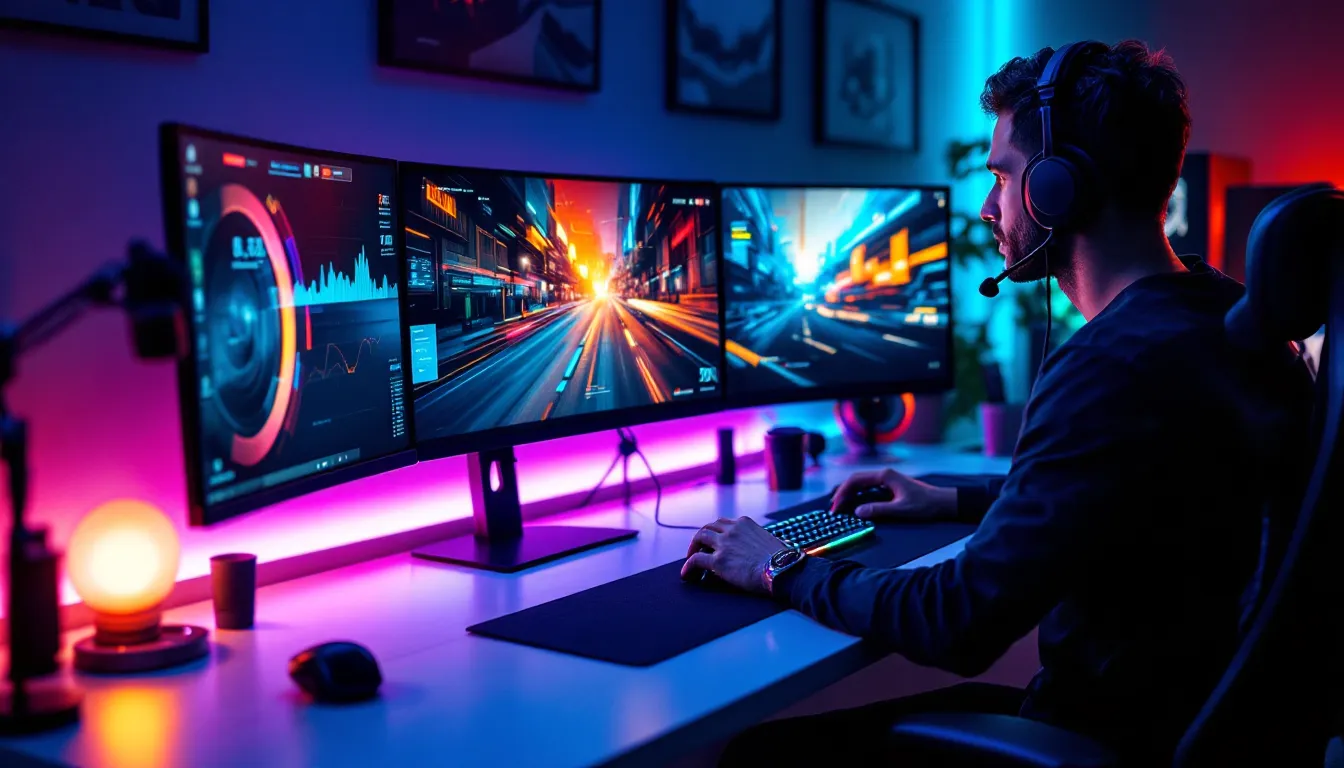
There’s a massive gap between someone who games and someone who really games. You know the difference. It’s the player who obsesses over frame times, not just framerates. The one who knows their keybinds better than their phone number. The gamer who’ll spend an hour tweaking settings for a 3% performance gain because those margins matter.
That’s enthusiast gaming. It’s not about having the most expensive gear or playing 12 hours a day. It’s a mindset. A commitment to understanding the mechanics, optimizing performance, and pushing your skills to their limits. Whether you’re grinding ranked queues in competitive shooters, perfecting speedrun strats, or building a PC that can handle anything at max settings, enthusiast gaming is where passion meets precision.
This guide breaks down everything you need to elevate your gaming from hobby to obsession in 2026. We’re talking hardware specs, setup optimization, genre mastery, and the technical skills that separate good players from great ones.
Key Takeaways
- Enthusiast gaming is a mindset focused on optimizing performance, mastering mechanics, and pushing skills to their limits—not just owning expensive gear or playing long hours.
- Your display and GPU are the highest-impact upgrades for enthusiast gamers; prioritize a quality 1440p/240Hz+ monitor and mid-tier GPU like the RTX 5070 before investing in other components.
- Enthusiast gaming combines competitive skills, genre-specific strategies, and technical knowledge like input lag reduction, network optimization, and performance tweaking that separate good players from great ones.
- Engage with gaming communities through Discord, forums, and content creation to stay current on patch notes, meta changes, and emerging trends that give you early advantages.
- Strategic hardware planning—such as waiting 2-3 GPU generations for upgrades and choosing platforms with long-term motherboard support—lets enthusiasts achieve 90% of maximum performance at 60% of the cost.
What Is Enthusiast Gaming?
Enthusiast gaming sits in that sweet spot between casual play and professional esports. These players aren’t necessarily earning tournament winnings, but they’re investing serious time, money, and effort into their craft. Think of it as the difference between someone who enjoys cooking and someone who owns every knife in their kitchen and can tell you why.
The term covers a wide spectrum. You’ve got the PC builder who researches motherboard VRM temps. The fighting game player who practices frame-perfect combos in training mode. The MMO raider who studies boss mechanics and optimizes their rotation down to the global cooldown. What binds them? They don’t just play games, they master them.
The Evolution from Casual to Enthusiast Gamer
The journey usually starts innocently enough. Maybe you got frustrated dying to the same boss and decided to look up a strategy guide. Or you noticed your FPS dropping in team fights and started digging into graphics settings. One YouTube video led to another, and suddenly you’re watching deep-dives on texture streaming and LOD bias.
The transition isn’t always linear. Some players develop enthusiasm through competition, getting wrecked in ranked pushes them to improve. Others fall down the hardware rabbit hole, realizing that their 60Hz monitor was holding them back. Story-driven gamers might evolve into enthusiasts when they start exploring mods, reshade presets, or challenge runs.
What triggers the shift is curiosity combined with commitment. Casual gamers accept games as they are. Enthusiasts ask “how can I make this better?” and then spend hours finding the answer.
Key Characteristics That Define Enthusiast Gaming
Enthusiast gamers share some telltale traits. They understand that game settings matter, not just “low” versus “high,” but specific options like texture filtering quality or shadow resolution. They can explain why TAA makes everything blurry or when to use frame generation.
They’re also gear-conscious without being brand-loyal snobs. An enthusiast knows the difference between polling rates, sensor types, and switch mechanisms. They’ve likely tried multiple mice, headsets, or keyboards before settling on their current setup.
Technical knowledge is another hallmark. These players understand concepts like input lag, frame pacing, netcode quality, and hitbox mechanics. They know what causes stuttering and how to fix it. When a patch drops, they’re reading the notes and theorycrafting how changes affect the meta.
Finally, enthusiasts engage with gaming culture beyond just playing. They follow patch notes, watch tournaments, participate in community discussions, and consume content about their favorite games. Gaming isn’t just entertainment, it’s a genuine interest they actively pursue.
Essential Hardware for Enthusiast Gaming
Hardware is where enthusiasm meets wallet, and in 2026, the options are both incredible and overwhelming. The good news? You don’t need to mortgage your house. The bad news? The rabbit hole goes deep, and it’s easy to get lost in specs.
High-Performance PC Components and Builds
Let’s cut through the noise. For enthusiast-level PC gaming in 2026, you’re looking at specific performance tiers:
CPU: AMD’s Ryzen 7 9800X3D or Intel’s Core Ultra 9 285K represent the sweet spot for high-refresh gaming. The 3D V-Cache on AMD chips still dominates in frame-sensitive titles, particularly MMOs and strategy games where draw calls matter. Budget-conscious builders can drop to a Ryzen 7 7800X3D and still crush 1440p gaming.
GPU: The RTX 5070 Ti and Radeon RX 8800 XT both deliver excellent 1440p performance with ray tracing. If you’re pushing 4K or streaming simultaneously, step up to an RTX 5080 or RX 8900 XT. Don’t sleep on VRAM, 12GB is the minimum for modern titles at high textures, and several 2026 releases recommend 16GB.
RAM: 32GB of DDR5-6000 CL30 has become the standard. Games like Starfield and Cyberpunk 2077: Phantom Liberty can push past 16GB under heavy modding. Faster speeds matter less than capacity and tight timings.
Storage: A Gen4 NVMe SSD with at least 2TB capacity. DirectStorage API adoption finally went mainstream in 2025, and load times in supported titles are noticeably faster. Samsung 990 Pro, WD Black SN850X, or Crucial T700 are solid picks.
Cooling: A quality 280mm AIO or high-end air cooler like the Thermalright Peerless Assassin 120 SE. Modern CPUs boost aggressively, and thermal headroom directly impacts sustained performance.
Next-Gen Console Optimization
Console enthusiasts have it easier in some ways, no component compatibility concerns, but optimization still matters. The PS5 Pro and Xbox Series X refresh (released late 2025) both support true 4K/120fps in select titles, but getting there requires setup tweaks.
Enable 120Hz output in system settings and make sure your HDMI 2.1 cable is certified. Cheap cables cause handshake issues that force fallback to 60Hz. Turn on VRR (Variable Refresh Rate) to eliminate screen tearing without the input lag of V-Sync.
Storage expansion is nearly mandatory. The internal SSD fills fast, and games like Call of Duty: Black Ops 7 clock in at 180GB+ with all content packs. For PS5, grab a PCIe 4.0 drive with at least 5500 MB/s read speed (WD Black SN850X, Samsung 990 Pro). Xbox Series users can use the proprietary expansion cards or cheaper external SSDs for backward-compatible titles.
Performance modes vary by game, but enthusiasts typically prioritize framerate over resolution. That “Quality” preset at 4K/30fps with ray tracing? Hard pass. Drop to 1440p upscaled and enjoy 120fps with tighter input response.
Gaming Peripherals That Make a Difference
Peripherals are where personal preference collides with objective performance, but some upgrades are non-negotiable for enthusiasts.
Mice: Wireless has finally caught up to wired in 2026. The Logitech G Pro X Superlight 2, Razer Viper V3 Pro, and Lamzu Atlantis Pro offer sub-1ms response times with 8000Hz polling. Weight matters, most competitive players prefer 60-70g. Sensor choice is less critical now: all flagship models use flawless optical sensors.
Keyboards: Mechanical switches dominate, but the debate between linear, tactile, and clicky continues. For competitive play, linears (Gateron Yellows, Cherry MX Reds) offer the fastest actuation. Enthusiasts who type frequently might prefer tactiles like Boba U4Ts. Hot-swap boards let you experiment without soldering.
Headsets: Spatial audio has improved dramatically. The SteelSeries Arctis Nova Pro and Audeze Maxwell deliver accurate positional cues that genuinely improve competitive performance in shooters. Don’t ignore mic quality if you’re playing team-based games, bad comms tilt teammates faster than missed shots.
Controllers: For fighting games and platformers, nothing beats a quality arcade stick or the 8BitDo Ultimate Controller. Xbox Elite Series 3 and PS5 DualSense Edge offer back paddles and adjustable trigger stops that matter in shooters and racers.
Building Your Ideal Gaming Setup
Hardware is only half the equation. How you arrange and configure your space directly impacts performance and comfort during marathon sessions.
Display Technology: Monitors and TVs for Competitive Advantage
Your display is the bottleneck most gamers don’t realize they have. That 60Hz panel from 2019? It’s costing you kills.
For competitive multiplayer, prioritize refresh rate and response time. The current sweet spot is a 27-inch 1440p display running 240Hz or 360Hz with an IPS or TN panel. The ASUS ROG Swift PG27AQN and LG 27GR83Q deliver sub-1ms G2G response times. If you’re primarily playing esports titles (Valorant, CS2, Apex Legends), even a 1080p 360Hz monitor makes sense, the motion clarity at high framerates is stunning.
Story-driven and single-player enthusiasts should consider OLED. The Alienware AW3423DWF and Samsung Odyssey OLED G9 offer perfect blacks and HDR that makes games like Alan Wake 2 and Resident Evil 4 Remake look phenomenal. Just watch for burn-in if you’re playing UI-heavy MMOs for extended periods.
TV gaming has legitimized in 2026. The LG C4 and Sony A95L OLEDs both support 4K/120Hz with VRR and sub-10ms input lag in game mode. They’re legitimate options for couch gaming, especially on console.
One often-overlooked spec: contrast ratio. It matters more than peak brightness for most gaming scenarios. Deep blacks make dark areas in horror games and night maps in shooters far more immersive and tactically useful.
Audio Solutions for Immersive Gameplay
Good audio isn’t just about immersion, it’s a competitive tool. Hearing enemy footsteps, reload sounds, or ability cues half a second earlier translates to reaction advantages.
Most enthusiasts eventually move beyond gaming headsets to dedicated audio setups. A quality DAC/amp combo (Schiit Modi/Magni stack, FiiO K7) paired with studio headphones (Sennheiser HD 560S, Beyerdynamic DT 900 Pro X) delivers better imaging than any gaming headset at the same price point. Add an external mic like the Antlion ModMic or standalone USB mic for comms.
For immersive single-player experiences, surround systems still have a place. A proper 5.1 or 7.1 setup with discrete speakers creates spatial awareness that headphones can’t quite match. Just expect to spend $1000+ for components that don’t sound muddy.
Software matters too. Windows Sonic and Dolby Atmos for Headphones both provide solid virtualized surround, but results vary by game. Test with your most-played titles to see which works better.
Ergonomics and Gaming Space Design
You can’t perform at your peak if you’re physically uncomfortable. Enthusiasts who ignore ergonomics end up with wrist pain, back issues, and degraded performance.
Chair: Skip the “gaming” chairs with bucket seats. Grab a quality office chair designed for 8+ hour use, Herman Miller Aeron, Steelcase Leap V2, or budget-friendly options like the Branch Ergonomic Chair. Lumbar support and adjustable armrests aren’t luxury features: they’re necessities.
Desk height and monitor position: Your eyes should naturally fall on the top third of your display. Elbows should rest at 90 degrees with forearms parallel to the floor. Most desks are too high, consider a keyboard tray or lower desk.
Cable management: It’s not just aesthetics. Messy cables create drag on your mouse and get caught during sweeping movements. Velcro ties, cable channels, and a bungee cord for your mouse cable solve 90% of issues.
Lighting: Bias lighting behind your monitor reduces eye strain during long sessions. Smart bulbs let you adjust color temperature, warmer tones for late-night grinding, cooler for competitive focus.
Mastering Game Genres as an Enthusiast
Enthusiasm isn’t just about having the best gear, it’s about developing genre-specific skills and understanding what each type of game demands.
Competitive Multiplayer and Esports Titles
Competitive gaming requires mechanical skill, game knowledge, and mental fortitude. Getting good isn’t accidental.
First-person shooters (Valorant, CS2, Call of Duty) demand aim training and map knowledge. Tools like Aim Lab and Kovaak’s help develop muscle memory, but they’re supplements, not replacements for in-game practice. Spend 20 minutes daily on tracking, flicking, and target switching drills. Learn spray patterns and recoil compensation for your main weapons.
Map awareness separates average players from strong ones. Know common angles, rotation timings, and sound cues. Watch pro players, not to copy their playstyle wholesale, but to understand their decision-making process.
MOBAs (League of Legends, Dota 2) require different skills: last-hitting, wave management, objective timing, and team coordination. Master 3-5 champions deeply rather than playing 30 superficially. Understanding matchups and power spikes wins more games than mechanical outplays.
Fighting games are perhaps the purest test of individual skill. Frame data, combo optimization, and reading opponents are all learnable. Join your game’s Discord, find training partners at your skill level, and review your replays. Getting bodied by better players teaches you faster than beating worse ones.
Story-Driven and Single-Player Experiences
Enthusiast appreciation of single-player games goes beyond just finishing them. It’s about experiencing them at their best, technically, mechanically, and thematically.
Modding communities have exploded in 2026. Starfield, Baldur’s Gate 3, and Cyberpunk 2077 have thousands of quality-of-life improvements, visual overhauls, and content expansions. Learning to use mod managers (Mod Organizer 2, Vortex) and understanding load orders unlocks games’ full potential.
Challenge runs add longevity. Permadeath modes, self-imposed restrictions (no fast travel, no HUD), or speedrunning categories give familiar games new life. Elden Ring enthusiasts have created dozens of challenge variants, from level-one runs to hitless boss rushes.
Most underrated skill? Photo mode mastery. Games like Horizon Forbidden West, Ghost of Tsushima, and Marvel’s Spider-Man 2 have robust capture tools. Learning composition, lighting, and timing creates shareable moments that deepen appreciation for the artistry.
Emerging Genres and Indie Gaming
The indie scene in 2026 is producing some of the most innovative titles, and enthusiasts who sleep on smaller releases miss out.
Roguelikes and roguelites continue dominating. Hades II, Slay the Spire 2, and newcomers like Inkbound demand strategic thinking and build optimization. The genre rewards system mastery, learning synergies and optimal pathing through procedural content.
Extraction shooters carved out a dedicated enthusiast following. Escape from Tarkov, Hunt: Showdown, and Marathon (releasing Q3 2026) combine looting, survival mechanics, and high-stakes PvP. Success requires map knowledge, inventory management, and accepting that sometimes you lose everything.
Cozy games might seem casual, but dedicated players approach titles like Stardew Valley, Dave the Diver, and Sun Haven with spreadsheet-level optimization. Min-maxing crop layouts and mastering cooking recipes scratches the same itch as theorycrafting in MMOs.
Performance Optimization and Technical Skills
This is where enthusiasts separate from casual players. Anyone can install a game and hit “play.” Enthusiasts make it run better than the developers intended.
Software Tweaking for Maximum FPS
First rule: understand your hardware’s bottleneck. Use MSI Afterburner or HWiNFO64 to monitor GPU usage, CPU usage, RAM allocation, and temps during gameplay. If GPU usage sits below 95% while gaming, something else is limiting performance.
In-game settings optimization follows a hierarchy. Some options tank performance for minimal visual gain:
- Shadows: Usually the biggest FPS killer. Drop from Ultra to High or Medium. The difference is barely noticeable during actual gameplay.
- Ambient Occlusion: SSAO or HBAO+ provide 90% of the visual quality of ray-traced AO at a fraction of the cost.
- Anti-aliasing: TAA causes blur. Use SMAA or in-game sharpening. DLSS/FSR 3.1 provide better image quality and performance than native rendering in most 2026 titles.
- View Distance: Matters in competitive games, less so in linear single-player. Adjust based on genre.
- Volumetric Effects: Fog, god rays, and volumetric lighting are expensive. Dropping these to Low rarely hurts visuals significantly.
Windows optimization matters. Disable fullscreen optimizations, enable Game Mode, and consider Process Lasso for core affinity tweaking on CPUs with mixed P-cores and E-cores. Enthusiasts running high-performance PC components often undervolt their GPUs for better thermal headroom and quieter operation without performance loss.
NVIDIA Reflex and AMD Anti-Lag reduce system latency by 10-30ms in supported competitive titles. That’s measurable, meaningful improvement in reaction-based scenarios.
Network Optimization and Reducing Latency
No amount of hardware helps if your network’s holding you back. Start with the basics: use ethernet. Wi-Fi 6E is good, but wired is better. Period.
Router placement and quality matter. Gaming routers with QoS (Quality of Service) prioritize game traffic over background downloads. The ASUS RT-AX86U Pro and Netgear Nighthawk RAXE500 both handle multiple devices without degrading gaming performance.
Check your bufferbloat score at waveform.com/tools/bufferbloat. High bufferbloat causes latency spikes when other devices use bandwidth. Adjusting QoS settings or switching to a router with better buffer management fixes this.
DNS changes are placebo for most users, but using Cloudflare (1.1.1.1) or Google DNS (8.8.8.8) can reduce initial connection times.
Finally, understand the difference between latency and bandwidth. A 100Mbps connection with 15ms ping outperforms a 1Gbps connection with 60ms ping for gaming. You don’t need gigabit speeds, you need stable, low-latency routing to game servers.
The Enthusiast Gaming Community and Culture
Gaming’s social dimension has always existed, but in 2026, community participation is practically built into the enthusiast identity.
Streaming, Content Creation, and Sharing Your Passion
You don’t need 10,000 followers to benefit from content creation. Many enthusiasts stream or record purely for personal improvement, watching your own gameplay reveals mistakes you don’t catch in the moment.
That said, building an audience is more accessible than ever. Twitch, YouTube Gaming, and Kick all support small streamers with improved discoverability features. The key isn’t expensive equipment, it’s consistency and personality. A decent USB mic ($100), free OBS software, and genuine enthusiasm beats a mediocre streamer with a $5000 setup.
Focus on a niche. “Variety gaming” channels struggle unless you’ve got extraordinary personality. Becoming the go-to source for a specific game, strategy, or genre builds dedicated audiences faster. Recent coverage from industry analysis sites showed that micro-content creators with 500-2000 active viewers often have more engaged communities than mid-tier streamers chasing 10k+ concurrent viewers.
Video editing skills pay dividends. Learning DaVinci Resolve or Adobe Premiere lets you create guides, montages, or analysis videos that have longer shelf lives than streams.
Joining Gaming Communities and Forums
Reddit, Discord servers, and dedicated forums remain the heart of enthusiast culture. Game-specific subreddits like r/CompetitiveApex or r/DestinyTheGame provide patch analysis, strategy discussions, and LFG opportunities.
Discord has become the de facto community platform. Most games have official servers, but smaller community-run Discords often have better discussion quality and less spam. Look for servers focused on your specific interests, competitive play, speedrunning, modding, or lore discussion.
Don’t lurk forever. Enthusiast communities reward participation. Answer questions when you can, share your builds or strategies, and engage authentically. The players who helped you improve were once asking the same beginner questions.
For those organizing gear and equipment storage, community connections help with trading, selling, or passing along older hardware to newer players.
Staying Current with Gaming Trends and News
The gaming landscape shifts constantly, new patches, hardware releases, and meta changes happen weekly. Enthusiasts stay ahead by curating information sources.
Follow genre-specific outlets. Game news and reviews sites provide broad coverage, but specialized sources offer deeper analysis. For PC hardware, track channels like Hardware Unboxed and Gamers Nexus. Competitive players follow pro scene coverage and patch note breakdowns from analysts like ThePeachCobbler (fighting games) or LS (League of Legends).
Patch notes aren’t optional reading, they’re required material. Understanding how balance changes affect the meta gives you early advantages. When a patch nerfs the top-tier strategy everyone’s been running, be the player already practicing the next-best approach.
Social media, even though its flaws, remains valuable for real-time news. Twitter (or whatever it’s called this week) breaks hardware leaks and game announcements faster than traditional outlets. Curate your follows carefully to avoid noise.
Don’t ignore emerging platforms. TikTok and Instagram Reels have surprisingly good bite-sized guides and tech tips. Short-form content isn’t inherently shallow, skilled creators pack genuine value into 60-second clips.
Most importantly, balance information consumption with actual playing. It’s easy to spend more time reading about games than gaming. The point of staying current is enhancing your play, not replacing it.
Balancing Budget and Performance
Enthusiasm doesn’t require unlimited funds. Strategic spending delivers 90% of the performance at 60% of the cost, if you know where to allocate resources.
Where to Invest for Maximum Impact
Not all upgrades provide equal returns. Here’s where money makes the biggest difference:
Display > GPU > CPU > Everything Else. A good monitor lasts 5-7 years and immediately improves every game you play. Budget $400-700 for a quality 1440p/144Hz+ panel before maxing out your GPU.
Graphics cards scale weirdly, the top-tier models often cost 50% more for 15% better performance. The xx70 tier (RTX 5070, RX 8700 XT) consistently offers the best performance-per-dollar. Only step up to xx80-series if you’re pushing 4K or have specific use cases (streaming, content creation).
Peripherals deserve more budget than most allocate. A $150 mouse and $120 keyboard that you use for thousands of hours is a better investment than RGB RAM that looks cool but doesn’t improve performance. The tactile response and build quality of premium peripherals genuinely affects your experience.
Storage is cheap in 2026, there’s no excuse for running games off HDDs. Even budget Gen3 NVMe drives (WD Blue SN570, Crucial P3) provide massive improvements over SATA SSDs for under $80/TB.
Upgrading Strategies Over Time
Smart upgraders plan in generation leaps. Replacing a GPU after one generation rarely makes sense, the performance delta isn’t worth it. Wait 2-3 generations. Your RTX 4070 doesn’t need replacing until the RTX 7070 or RX 9700 XT arrive.
Platform longevity matters. AMD’s AM5 socket supports CPUs through at least 2027, meaning a motherboard purchased in 2026 can accept next-gen CPUs without a full rebuild. Intel’s LGA1851 promises similar longevity. Don’t cheap out on the motherboard, it’s the one component you keep through multiple CPU upgrades.
Sell old components while they retain value. The used market is robust, and last-gen hardware sells quickly. A GPU that’s worth $300 today might fetch $150 in two years. Sell earlier rather than later to fund upgrades.
Timing purchases around hardware launches maximizes value. When RTX 5000-series launched, RTX 4000 prices dropped 20-30%. Patient enthusiasts who bought last-gen hardware at launch-day discounts got 85% of current-gen performance for 60% of the cost.
Finally, accept that you can’t future-proof completely. Hardware evolves too quickly. Build for your current needs with reasonable headroom (16GB VRAM instead of 12GB, for example), but don’t overspend trying to guarantee relevance five years out.
Conclusion
Enthusiast gaming isn’t a destination, it’s an ongoing process of refinement and learning. The hardware gets upgraded, the skills improve, and the understanding deepens. What made you an enthusiast last year might just be your baseline today.
The landscape will keep shifting. New games will demand different skills. Hardware innovations will change what’s possible. The meta will evolve, patches will drop, and the community will move on to the next big thing. That’s the whole point. If you loved gaming enough to read this far, you’re already part of that evolution.
Now stop reading and go play something. Those framerates won’t optimize themselves.
About Author