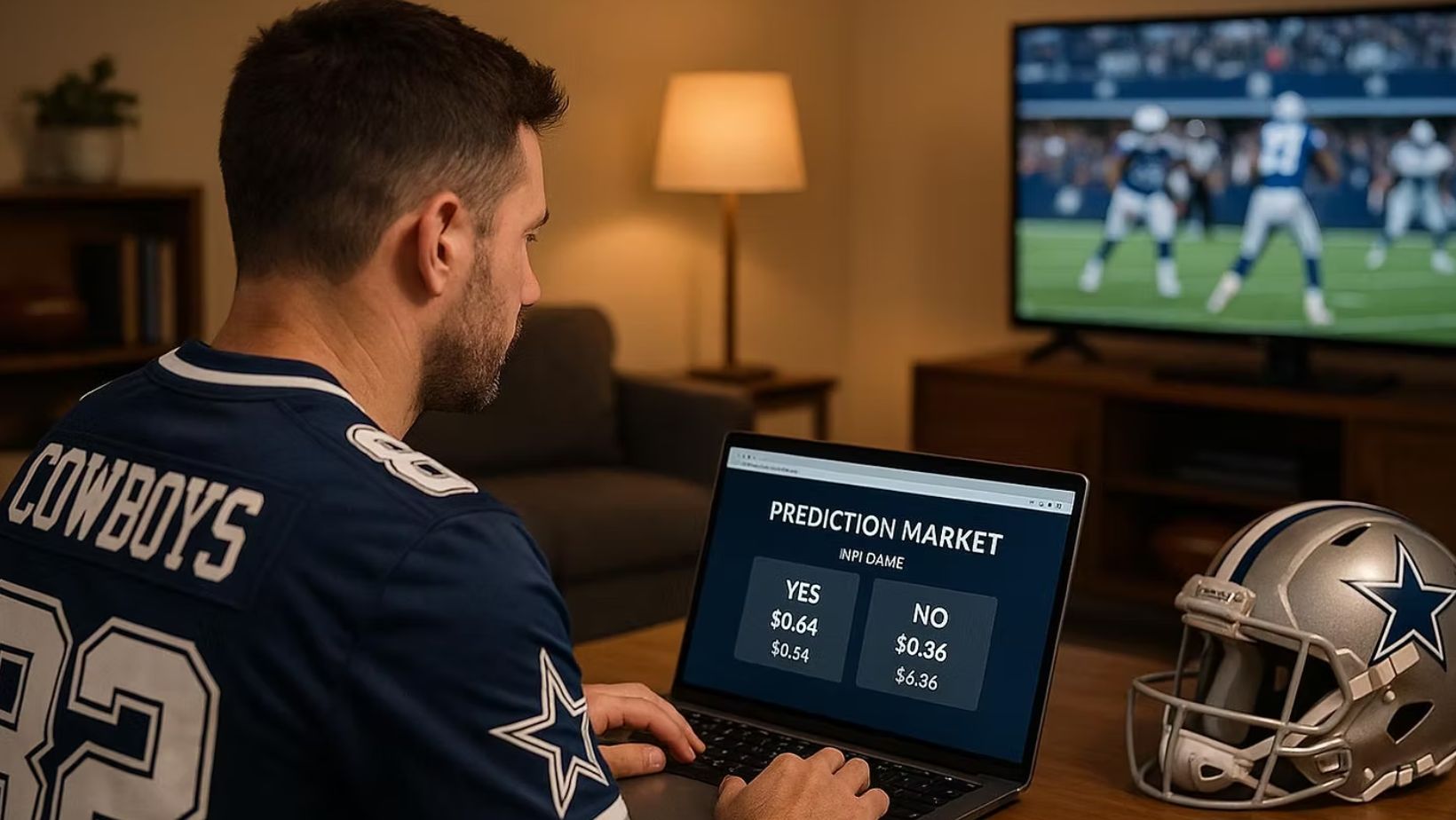
If you have spent any time invested in following and watching live sports over the past two years, you have almost assuredly come into contact with a burgeoning buzzphrase: prediction markets. But you may not know what they are. Better yet, you may not understand how they differ from legal sports betting.
This is by design. Billed as alternatives to legal sports betting that are available to Americans in every state, prediction markets are attempting to disrupt one of the country’s most lucrative growth industries. Experts agree that companies offering these services will not replace sports betting on a macro scale. Among other things, the resources available to sports bettors are far superior. That is especially true for beginners.
People first dipping their toes into sports betting can get all the information they need from thorough explainers and reviews at places like https://www.vegasbetting.com/. Prediction-market how-tos are not only harder to come by, but they’re often unpacked using stock-market vernacular that are hard to follow.
This makes it even more important to understand the differences between these two industries.
The Primary Difference Between Sports Betting and Prediction Markets
The starkest contrast between prediction markets and sports betting is how odds are determined and payouts are framed.
In sports betting, customers are wagering money against “The House,” which is effectively the site or casino they are using. The payouts for these transactions are determined by “The House.” They take into account public sentiment (i.e. the popularity of a bet), but they are predominantly constructed via proprietary data models that factor in as many variables as possible, both historical and current.
When betting on sports, you will also see odds presented in the form of how much you win if you wager $100. For example, if you take the Las Vegas Raiders to defeat the Los Angeles Rams at +150, you would win $150 for every $100 you put on the line.
Prediction markets frame their transactions in an entirely different light. For starters, they are called “trades” rather than bets. Payouts and lines are also presented relative to the cost per share, which are always out of $1.
Let’s consider the same Raiders vs. Rams matchup. If a share of the Raiders to win is valued at $0.47, you will win 19 cents for every $1 you invest, according to expected value calculators. This return is before factoring in any platform fees, which you are guaranteed to pay, since that’s how prediction-market operators earn money.
This brings us to the contrast in how those payouts are determined. Where sports betting platforms create them internally, prediction market prices are based on share-purchase volume—or public sentiment. If the Raiders to win costs $0.47, you can surmise a slight majority of users believe the Rams ($0.53) are going to win.
Prediction Markets are More Limited than Conventional Sports Betting
Despite prediction markets perhaps serving as a viable alternative in markets without legal sports betting, they have their limitations relative to how they’re set up. Most notably, their legality is in question.

Both state and federal officials are attempting to take action against companies who operate prediction markets. While these transactions are currently regulated by the Federal Trade Commission, many argue they run in direct conflict with sports betting laws, which are crafted and regulated by each individual state.
On top of that, even without the issues of legality, prediction markets are limited to yes-or-no outcome events. Though this allows them to wade into all different transaction types, it does restrict how many prop-style offerings they can provide. If you want to put money on Raiders quarterback Geno Smith surpassing a certain number of touchdowns for the season or an individual game, you will have an easier time finding that at an online or brick-and-mortar sportsbook.
The same logic applies to live lines. Prediction markets will let you purchase shares after competitions have already started, but their catalog isn’t nearly as expansive as the usual sportsbook. Specifically designed gambling sites will have more options available for any individual game or match.
Last but certainly not least, prediction markets do not offer online casino elements. Many online sportsbooks now also have casino-style games attached. That is not something prediction-market operators like Kalshi or Polymarket can replicate, because they aren’t licensed to do so.
These differences ultimately ensure the future of sports betting, at least for the time being. Prediction markets may reach a certain popularity in regions reluctant to legalize gambling. But when given the choice between using a sportsbook or prediction market, without legality being an issue, the former may always wind up being the more popular selection.
About Author